This second issue of this already very popular micro-mag includes new writing by Patricia Lockwood, Colm Tóibín, Lucy Ellmann, et al., with Ithell Colquhoun endpapers (the yellow cover rem... read more
An immense, learned and witty sweep of literature by the editorial director of New York Review Books and the founder of the NYRB Classics series. Frank is terrific company through the centur... read more
When the Hogarth Press published Gorky's book of apercus in 1920, it could hardly have been to greater acclaim: according to Leonard Woolf, 'it makes one hear, see, feel Tolstoy... as if one... read more
The first complete translation of the existentialist's notebook offers as remarkable an insight into his psyche as sitting opposite him at Les Deux Magots...
Following her biographies of Kierkegaard and George Eliot, this is a series of six philosophical meditations on what it means to write about a person's life, whether the singularity of a lif... read more
In this paean to the joys of reading, Douglas-Fairhurst recounts his life with books, sharing techniques to slow down, take note, and gain more from the experience. The Oxford don pairs rig... read more
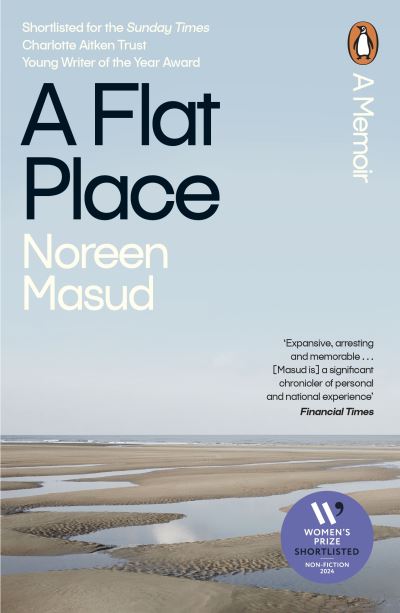
Essays on vanishings and impermanence - of places, people, rituals, objects - by this fine novelist who won the International Booker a couple of years ago with Kairos.
Variations on the Czech-French writer's most visited themes: language, exile, translation and Soviet and Western attitudes to Czech culture. A slim re-issue.
A selection of some of Le Guin's pieces examining the social and political power of storytelling, and how it can help us navigate the world - stories as lifelines to truth, understanding and... read more
With an introduction by Yiyun Li, this selection brings together Montaigne's profound and inquisitive essays on life, death, and how to live... Also cannibals.
Once upon a time, Lord Lundy was sent out to govern New South Wales. Now, says the great FM, he would be welcomed in our midst. A shrewd, anecdotal survey of emotion in history.
Posits Sylvia Plath and Taylor Swift as spiritual siblings, twinned by their female ambition and the patriarchy's seemingly irrepressible urge to trivialise them. Rallying and celebratory.
The poet, translator and editor of Nemo's Almanac is astonishingly well-read; if books do furnish a room, this man's memory palace will be vast and labyrinthine... With a book habit that beg... read more
How Christianity has faded from the centre-stage of our culture, and how this loss undermines our democratic and civic values - equality, suffrage, social justice. A valiant argument for how... read more
Very present, tense cultural criticism: a discursive set of essays on what has recently captured the writer's attention - from Tár to Celia Paul, and the shifting political terrain on eithe... read more
A mid-C19th collection of folktales, first published in 1841: this is its first new English translation in 150 years. Asbjornsen and Moe are the Brothers Grimm of Norway.
Egeler begins his remarkable history of the faerie world in the meadows of Iceland, moving on to Germany, Ireland, Scotland, England, from its Norse and Celtic origins to the lamplit rooms o... read more
Pieces together the story of a young woman who fell ill in a tower on a hill, was confined there by her father for three years and eventually died. Using fiction, fairytale and memoir, Lena... read more
A wonderfully discursive wander through Alice's Wonderland, Mr McGregor's neat rows, Elizabeth von Arnim's garden and Sei Shonagon's; with other conjurings by Alexandre Dumas, Katherine Mans... read more
The dark age of the soul: a close look at the terrifying erosion of the spirit by techno-capitalism and its machinations, and a reminder of what makes us human.
The cognitive scientist explores the centrality of 'common knowledge' to all human interactions, from awkward first dates to the toppling of regimes. Highly illuminating.